The Brutally Honest Guide to Product Management

"All the responsibility and none of the authority"...This is the muttered mantra of the product manager. I've collected my battle scars from 26+ years of start-ups to Fortune 50 companies. I'm sharing 'em all, semi-edit, to let the next gen avoid some of the hidden traps and find ways to smooth over the rough patches.
Showing posts with label Product Management. Show all posts

Tuesday, May 14, 2013

Programmers 1-100, everyone else 1-10

Talking with Jonathan Gay the other day reminded me that I used to use him as an example of how if people from every normal profession could be measured from 1-10, that the best programmers were so much better then everybody else, that they needed to be measured from one to 100. The story was that back in the mid '80's when Silicon Beach Software was working on the first real paint and vector combined graphics program, SuperPaint, that there had been a programmer working on a year to get the bezier curve code working.  Jonathan, who had worked on Dark Castle, previously as a kid, came back from college that year on a two week spring break, and rewrote the code from scratch.  I can't think of a profession where the best cook can produce a hundred times faster and better then another professional. Did I mention that he later on ended up creating this cool intelligent graphics program that Macromedia ended up acquiring...what was it called?  Oh yeah, Flash...  He's working on a new startup in my brier patch, Photo/story sharing, and of course, there is some exceptional stuff that he's built.
Silcon Beach SuperPaint
I've encountered a few of these code gods over the years, Bill Appleton being another (Creator of SuperCard, and the reason I ended up at Silicon Beach, Jay Fenton, who created VideoWorks, that eventually became Director and the father of modern animation systems.  (For the longest time after he left, the people who worked on the code he left behind were working on it much the same way that earth engineers might try and build a space ship from an alien engine that had been recovered from an area 51 crash site.  No one really understood how it worked, but they kept sticking stuff on top of it, praying it would keep working.  These code gods can sometimes be extremely temperamental (not the case with Jonathan), but annoyance with the less fleet of creation is a price that both they (and we) need to pay for creation that comes as close to wizardry as exists in our world.


Thursday, September 9, 2010

Entrepreneurship in big companies…100% failure?


Source: Scripting News ( Dave Winer)
Oh they wanna do it!  They want it so bad it haunts their dreams… “Innovate…before someone else takes your market away…be young and scrappy again…disrupt yourself before someone else does it to you….”.  Most heads of big companies want to foster internal innovation and entrepreneurship in the worst way.  They set up labs apart from the constant grinding need to feed the under staffed folks who are shipping the bread and butter projects, they spend big bucks hiring EIRs (Entrepreneurs in Residence), they put together VC funds, they set up internal entrepreneurial training, innovation prizes, and officially set aside time for people to work on projects outside their normal work.  They carefully read Christenson’s Innovation series of books looking for clues.  AND, WITH RARE EXCEPTIONS, THEY ALL FAIL!  What the hell?  None of these are stupid people.  Many of them have done the exact thing they are trying to get done within the bigger companies? So why doesn’t it work? 


Tuesday, August 17, 2010

Agile and the overseas team-The bad game of telephone.


I was talking with a company the other day about managing projects overseas, and it got me to thinking about another PM area that mother never told you about. In an Agile world, driven by use cases and high communication quick turns, how do you make that work with overseas teams?

Let’s be honest for a minute about Agile. At its essence, it is basically “You know what I’m talking about, just go do it.” In the dark of night, if the folks who created it, or most loved it were honest, it comes from a deep sense of frustration from engineering teams at being constantly dissed in their ability to contribute to the design of what they were building, and being instead treated like construction workers, given specific plans and expected to do their damn jobs, without adding any creativity or insight beyond clever ways to implement the code.

Now I actually love this. The best success I’ve had over my career has come from letting everyone in on what we’re trying to get done, and not being such a prima donna about separation of spec and implementation. I was always about trying to do the old acting trick of getting into the mind and skin of the people we were building for and communicating the emotional reasons why people wanted what we were building to the team so they could internalize it and know at three in the morning what the right choice was without needing to have papa check everything. So the transition to use cases, and telling the emotional story tied up with the functional things the user needs to get done was like coming home, and worked beautifully…except when it came to overseas teams.

In general, we want to think of these teams as either just extensions of our existing teams, or implantation machines, much more often the latter. It is completely true that use cases fail on a regular basis with these teams. As good as language fluency may be, communicating emotional states is mostly the job of metaphor or common cultural reference. No overseas team wants to admit they don’t get it, particularly on the level of nuance, so they will tend to take apart the use case mechanically, laying out each action and solving for that sequence without understanding the emotional importance of any part of that process. All of use who have done the time delayed emails or the 5 am calls know the frustration on both sides of mostly getting it, but never being quite sure. So we tend to go back to old-school exact specs to minimize the frustration on both sides, and more importantly to minimize the days wasted in what would otherwise be simple “Did you mean X?” back and forth chats if the communication was happening in real time. After all, we are paying them to get what we want done, that should be enough, right?

The unseen problem is that the overseas engineers are in the same place that the early engineers that came up with Agile in the first place were at. If they are any good, ultimately they are hungering to do more then punch a clock and just code (and then recode) what they were told to do, without any independent intelligence or investment in the ultimate service of the customer. In the place where we need those team members to most be able to act independently and “know” the right thing to do most of the time, we have instead disconnected them from that, and made them extensions of our own hands that act with a 12 hour delay both to get their signals and to send nerve impulses back.

So how do we solve for this problem? Most of the ways are frankly pretty difficult. The first and most ideal is to have at PM on the ground overseas who bridges both cultures. An ex-pat, or someone who both went to school and worked in the US long enough to get acclimated. (This can be tricky, because being here is not enough. Cliché as it may be, the best engineers are not often the most social of butterflies, and someone who came over to MIT and never left the tunnels may be a wonderful engineer, but won’t be able to create that cross cultural bridge.) With that person in place, get enough of the teams together face to face for long enough to get past the nodding stage and to the point where people can see the crinkle of a smile in the eyes behind the emails. Fly there, bring them here…whatever works with the budget. It IS PART OF THE COST..don’t leave it out of the equations.

The second option is to make sure to over staff with UX/UI. You need people who can work in sketch, who aren’t so worried about their stuff being pixel perfect that they are ok sending out quick versions of interfaces and flows. A picture being worth a thousand words is double true when you have teams across oceans. (This, by the way, is true of Agile in general. It most often fails when UX/UI falls behind and the engineers get frustrated and end up just doing the UX themselves. There are engineers who can where both hats, but there are a LOT more who can’t, think they can, and get hurt feelings when you have to repair or replace what they spend time doing.)

It’s virtually impossible to do standard Agile with an overseas team, but you can bring them deeper into the fold. If you do, the work will be better, and you will get less churn with the engineers, because they will be sooo much happier working on your stuff then going back to being coding drones.

Here are a couple of good related links:


Using an Agile Software Process with Offshore Development by Martin Fowler

Friday, June 4, 2010

Innovation Frustration

"Go Innovate!" comes the cry from the top.  They just know that if the team can come up with the right something that marketshare, valuation, and all good things will fall from the sky.  They've read Christensen's books, been chastised by various VC's and in general seen other companies take their cookies away.  The problem is that there is NO realization of the reality that that creates.  What happens is that each team member searches around for some part of the problem that speaks to them.  They feel the emotional connection to something that they personally wish was better and they go off and build something great to solve that slice.  That emotional connection is a powerful motivator, and in fact is the key to all great development. With great pride, they come to management with either their idea or even better, a built thing, ready to do the gather and cast routine and get their due kudos.  At which point, management looks at the results of their request, realizes it doesn't quite match the internal requirements that were sitting unspoken in their collective heads.  They tell the innovators "nice, job, but not quite what we're looking for.  Go off and try again!"


The dangerous part of this has to do with team moral.  Repeat this a couple of times and the best motivated employee becomes convinced that management is a bunch of short-sighted, time wasting idiots and they go back to not working from their hearts, but punching the clock, needing exact specs so they can do just what they are paid to do without risking more rejection and knowing that their instincts are not trusted.  Ive seen this happen way to many times and it is a silent killer of motivation, because the innovator in question is embarrassed by their failure and therefore likely won't vent any of that frustration directly.  The solutions are twofold.

  • Management be much more honest and specific about the constraints of the problem
  • Identify what the real customer opportunity areas and focus on those.
For the management side, if people are really honest with themselves, there are usually specific business goals that hide behind the request for innovation.  It's not that they want a better photo upload experience, what they really want is an increase in the viewer signups so the viral spread increases.  But in WAY too many cases, they don't want to expose those business needs to the team because they feel like it shows weakness in their current model, or they can't express it in a way that bridges the gap between doing good business which may come across as heartless and doing the "right thing" for the users. Expressing the innovation requirement as the intersection between those to points is trickly, but ultimatly clever people need to know the rules of the game before they can figure out how to win it.

The customer opportunity is something we've talked about before.   This is that process of paying careful attention to how the customer does the job in your are and which parts of doing that job are annoying them now.

Do this wrong and no one is happy with the results, and you kill your golden goose.  In this case, they only keep laying if you like the eggs. :-)

Source: Strategyn.com

Wednesday, March 10, 2010

Venn To Get Funding: The Entrepreneur’s guide to TAM (total addressable market) on the Cheap (or free)

Venn To Get Funding: The Entrepreneur’s guide to TAM (total addressable market) on the Cheap (or free)

This next post is a three-parter going straight down into the maw of one of the single most important part of getting any project or company off the ground: The dreaded TAM (Total Addressable Market for those engineers who are trying to make something work without the brain pollution of standard marketing types.), or "So how big is the market for this, really?"

It’s sooo much easier when you are working for a big company.  Just call the folks who keep the corp. library or competitive research group and ask for all the market size data you need.  (Ok…it’s not that easy since most new ideas don’t have direct market data support but require bank shots to figure out, but still a lot easier.)  But when you’re in a small company, start-up or start-up wanna-be, you are in a serious catch-22.  You need credible market size numbers to get funding, but without the numbers, you have no extra cash to spend money on analyst reports.

What we’ll cover here is why the hell you need to build the TAM in the first place, how to figure out how to use mental sonar to ping around the shape of credible market sizing  when you are blazing new trails, and where and how to find good market data for nothing, since that's usually yer budget.

Part 1:  TAM the Torpedo-full speed ahead (Or why do you need a Venn anyway?)
Part 2: Market sizing as a word problem
Part 3: Where to sneak free market data

Wednesday, February 3, 2010

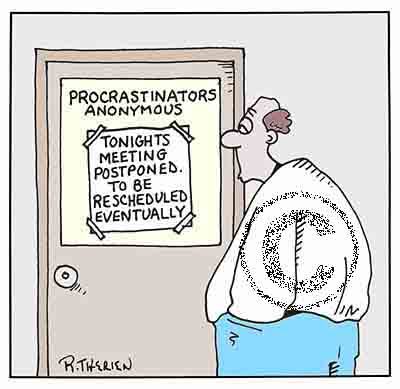
The “I really need to get around to figuring out a good title for the procrastination section” Post

As I embark on this brutally honest guide to the wonderful world of Product Management, the first place I need to apply that honesty is in an area far to many of us share, but we all hide like a substance abuse problem. Hello, my name is Ben Calica, and I’m a procrastinator. Its not one of those things that you list in a job interview when asked your weaknesses,(“Some people say that I’m too dedicated to my work.” Or “I can be too passionate about a project.” ), but the reality is that product management requires a blend of very anal skills and wildly creative ones. For those of us who lean in the latter direction, procrastination can be a professional hazard. And for those who lean the other way, dealing with procrastination within the team can be an ongoing and potentially dangerous area.

Being very direct about it, there are several specific reasons that people tend to procrastinate.
  • · The Paralysis of perfection
  • · Deadline Junkies
  • · “This is dumb”-passive resistance
  • · Plain old Fear-Show work not, Lest yee be judged..
  • · Quack Quack-The Too Long Duck…
The Paralysis of Perfection:
I've struggled for years trying to help people with this problem with the work we've done on photo sharing. In the old scrapbooking days, people would put off doing the scrapbooks until they got all the “right” photos together. That quest to get things “right” before anyone else sees is the Achilles heel of even the most super organized. I’ve been working on the various elements of this blog for weeks, but a big part of me was spending so much time fussing over whether it was ok to use off the shelf blogging formats or whether to start working on the evolution a blog and web-born journalism blend that I’ve been playing with for a number of years. “Getting it right” can be the death of so many projects and our desire to not have anyone see something that is less then our self perceived best work can be a significant trap. Anne Lemott, one of my favorite writers, as a book called Bird by Bird, in which she talks about intentionally writing “the shitty draft”, giving yourself permission to fail the first time around to remove the power that trying to be perfect holds over you.

Deadline Junkies:
If we didn’t enjoy being the Fire-fighter-in-chief, none of us would be drawn to this profession. Again, being honest, most of us thrive in that high-pressure, high intensity environment. For some of us, that sweet spot of full engagement doesn’t kick in until that pressure starts to mount. These are the deadline hogs, who need that jetted flame of a looming deadline to get the gears kicked in. If you, or members of your team are like that, BS deadlines don’t do the trick, we can see right through them. What is needed is some other energy source, either the stick or the carrot. Interestingly enough, for most of these folks, the stick just falls on increasingly thick hide. On the other hand, they love the challenge, so setting a stretch goal with something fun as a reward works like magic. (I won’t go into the debate on “but they’re getting paid and they are professionals, do they really need extra goodies?” in this post…but the short answer is life works better when it’s lubricated by fun stuff along the way.)

This is Dumb— the passive resisters:
So in the world of most projects, where we are only going to get to 5% of what we want to accomplish, if you think something is really dumb, there is a tendency to keep putting that at the bottom of the list of priorities. This is usually an issue of lack of communication. I was Principal PM on a big project recently, and there was part of the project that didn’t make any damn sense to me. It was reformatting our spec in a certain way for the engineering team, where I had seen the previous spec lead the way and end up completely ignored. In a world where we were understaffed to about 20% of what the team should have been, it just drove me bonkers to waste my time on what I knew was a totally valueless exercise. What I didn’t know was that the Project Leader who was asking for this, also knew it was a waste of time, but he needed it done to claim high ground over the engineering team, in a world where Product Management were the ugly step-children of the company. I could have understood that, but it wasn’t something that he could admit as a manager. Most projects are rife with passive resistors, and the tendency is to want to take a stand and bend them to your will to show who’s running the damn show anyway. This kind of belly bucking just ends up with both people knocked down on the ground and creating people within the team who are deeply motivated for management above you to see how wrong your judgment can be. To get rid of this, you need to go straight at the resister, and not only listen to why he/she thinks this is a waste of time, but make sure they feel heard.

Fear, just plain old fear:
Carol Dweck, in her book Mindset, talks about what happened in the last generation of too bright for their own good kids, which, let’s face it, is most of us working in tech. When kids are told how smart they are when they are younger, they like being thought of in that way, and get more and more afraid of doing anything that will get that label stripped off of them. As a result, we go back to our first problem, that strong desire to have everything that comes out of them be great, and the very real fear of looking foolish and getting that belief in them stripped away. This is especially bad for PM’s, who live with the whole team watching them and looking for signs of hesitancy and weakness. Thus MRD’s need one more day to polish, reports need to be checked through one more time, and specs are always almost done. Again, fear needs to be faced head on, or it gets a ton of power. Knowing that it’s ok to fail, that there is a reason we work on machines that have the ability to backspace and delete, and that we have each other’s backs, not waiting to stab in that same location, makes all the difference.

“Be like a duck”
You can lose friends though this insidious little beast. You mean to call, but it goes a bit too long. Now you can’t call, because it’s been so long since you were supposed to call, and when they call, you duck it because you are embarrassed about how long it has been. I lost touch with an Aunt that I love quite a lot, because I didn’t call when I was a younger guy going through a long and painful break-up, and it became so long that each day it was just too much emotional baggage to handle today. I had a friend who was doing some programming work for me on the start-up I was recently working on, and she didn’t get me what I needed in time. She became so embarrassed about that, that she stopped taking my calls, and it was only because I hosted a brunch for a mutual friend’s intro of their new baby, that we were able to get face to face and work it out. This does not go away unless one or both of the parties “man-up’s” and gets face to face to break the cycle. It’s going to be hard and embarrassing, but it will remove the nagging guilt that ends up being much more costly.
Ah..and in writing this…my procrastination is over, and I can go have my lunch. Let’s see if I can do better with my writing tomorrow…whether it’s perfect or not.

Tuesday, January 19, 2010

Product Definition-The Eternal Battle: Data vs. Instinct

Product definition…it is the most basic job a PM has and yet NOTHING is more potentially dangerous. Perceived weak product definition screws with getting projects funded, with getting the teams working in alignment without passive resistance, and with management and boards coming in and changing direction after every tradeshow, or competitor news story. (Notice I said perceived weak, not actual weak. You can have a great product definition and vision, but if it is not accepted by the folks who hold the purse strings, they will keep changing directions on you based on their latest return from trade show fire drill.  And if it isn’t both clear, and agreed to by the whole team, people either go off in their own directions, will do end-runs, or just get frustrated because they think you don’t know what you are doing and end up punching the clock.) On the other hand, a strong product definition that everyone buys off on gives you a team that can be creative in meeting that goal, actual alignment between marketing, product and engineering, and a lot of moral strength to fight off getting the team jerked around from above, even to the board level.

The core of the problem is this: None of us know what we are doing!

I’ll let that set in for a minute, and before you get too defensive about it, let me provide some context.
My wife is a Genetic Counselor. She lives in a world dedicated to discovering the objective truths in situations that often involve people making incredibly difficult decisions for themselves or their current or potential future children. Over the years, she has looked over my shoulder at the various methods I’ve used to determine the correct product decision with a sense of amused disbelief. And when I finally looked at it through her eyes, I had to admit she was right…we’re all just making this up. There are no objective facts here, just our best guesses. (And yes, I’m including most of the qualitative and quantitative methods in this. The truth is that we attempt to put a scientific quantitative method over what is at it’s core an incredibly subjective set of feelings from what is by it’s nature, a much too small sample of our potential customers. ) Anthony Ulwick, who actually has method that I liked the most and will talk about a little later, tells a story that illustrates this incredibly well. Back in the mid-eighties he was part of the group at IBM that launched the PC Jr. IBM was one of the best consumer marketing companies around, and they prided themselves on how well they knew how to do the VOC research. What they laid was one of the greatest bombs in PC history (I think only exceeded by the quarter billion Phillips blew on CD-I), and it really shook him. How could IBM, one of the greatest customer research companies of all time, miss the mark that badly? And as he looked at the wide consumer use (beyond just the tech world) of the standard VOC methods of figuring out what to make, he saw that even perfectly applied, the success rates were something like 20%.

This is a very disquieting fact for most of us. We want to feel like we did the right research, talked to the right people, and got the right voice of our customers so that we either A) have a successful product, or frankly B) can point to something outside of ourselves to blame if we get this wrong. I’ve seen way too much of the latter.
Instinct vs. Data Driven Product definition:
There are two basic schools of thought regarding doing product definition: gut vs. statistics. These two camps have very little respect for each other. Here is a bullet from a recent job posting for a PM role at Verisign:
• Gathering and analyzing internal and third-party data to make objective, fact-based recommendations that improve products relative to the defined strategies and objectives.
Can’t you just hear the disdain dripping…clearly whoever wrote this was tired of meetings filled with people chest bumping each other to show that they new best. When I was there, Adobe was that kind of company. To get a product approved, you needed to show that there was a market demand by heading over to the research department to cull the analyst (click here for a piece I did on how that sausage is made) world to build the obligatory Venn diagrams, and digging up time and funding with the customer research group to either do, or more likely piggyback on some other bit of research to try and dope out what people want. (I’ll write a piece later on the various ways different companies and funders need to see projects before they approve them.) This VOC research is the way most big corporations have been driving product definition for years, and creates a semi-impermeable shield to enforce a direction on the whole team. (“Hey…look, we did the research, and this is what the customers said…”). The challenge with this, and I’ve seen it WAY too much, is that customer’s can respond to what they think about a given product, but if you ask them to look into their future needs, they frankly don’t know what to say…they have lots of individual opinions, but what gets created ends up acting as a Rorschach test, which each stakeholder in the company ending up using the data to justify their own feeling about what should be done. And also, to be brutal about it, it’s not the customers job to tell us what to build…it’s their job to let us know what they want to get done at the end of the day. It’s our job to get clever about how to solve that.

Which brings us to the second school of product definition, instinct. One of my best friends, an ex-V.P. of Engineering at Adobe, pointed out that he thought I was such a good product definition guy because I ended up method-acting my customers. (Despite starting out as a Physics major, I ended up with my BA in Theater, much to my father’s dismay.). He was probably right, but that runs into major problems of it’s own. There are two parts of product process where everybody involved think they know best: UI and product definition. Any UI guy who’s had the whole world, one after another, stand over their shoulder and tell them to “move that up just a bit” knows the revenge desire to go over the coder’s shoulders and tell them to just “change that from a semi-colon to a colon” and see how THAT works. For those of us in charge of product definition, the situation is the same…everybody “knows” what we need to do, and it is that clash of instincts that leads to real problems: Either ongoing control battles with either lots of shifting direction, other people in the project waiting around for any perceived sign of weakness to jump in and get things to change based on what they think is the right way to go, or frustrated members of the team creating passive resistance that leads to them wanting to show why something isn’t going to work rather then trying to make things work.

One of the ways many companies deal with this is by making sure to hire someone in the PM role who comes from the area that the product is aimed at. The notion is that they have the moral authority to follow their instincts because they are the customers, and everyone else has to differ to their pronouncements. That can work, but it has a couple of significant downsides:
  1. Very infrequently are they experienced PM’s, and if they were that good at the target profession, why are they leaving it?
  2. It is still one person’s instincts, and the minute they prove wrong in any way, their credibility goes and the project falls apart.
  3. Often they will also try and hire marketing folks from the same area, and suddenly there are two experts who can clash….that also leads to a shaking in confidence in direction.
Another approach to getting every one in alignment is sheer force of will. A PM or company founder can create enough sense of force or confidence that people will follow. The downside is unspoken passive resistance, or a completed drop in confidence when directions need to change. This can lead to an increasing use of the stick, which can work well for death marches, but you’d better have a good flow of new employee’s, because you are going to need them when you’ve wasted those you have now. When I was younger, I tended to lead with passion and conviction, and this worked as long as I had the confidence of management and the team, but has gotten harder and harder over the years, and runs into big resistance within big companies and with a fairly large segment of the VC and angel community. Founders of companies are about the only ones who are allowed to make the great jumps based on instinct alone, and they have to either self fund or convince $$ to trust them. There was no good logic behind Acrobat, and if Chuck and John hadn’t been the ones to force it though, it never could have passed any of the VOC or market data tests. The same can be said, frankly for most of the innovative products that the now cautious companies were founded on.

The worst approach, in my opinion, is though committee and consensus building. This sounds great on paper, but in general turns out to be a process of finding the safe middle, where there is little chance for market expansion or disruption. Much better to make sure that the goal is clearly focused and let people come together to innovate under that lens. So how do you get that focus if you don’t have one person who is all-knowing, and the voice of your customers is an inconsistent mush with the disconnection from any objective fact usually reserved for economics. (That should really piss off the MBA’s, or at least those who aren’t honest with themselves about the power of numbers. I was selected to do the Apple/Stanford 3-Day MBA while I was at Apple, and the strongest thing I ended up with from that was how much more science marketing could be, and how much more creative accounting and projecting was.)

For me the answer stems from rephrasing the questions asked of the customers. Stop asking them what they want…they have no good way to tell you and it isn’t their job to get clever about that, it’s ours. Instead, concentrate on paying very careful attention to what those customers want to have done at the end of the day! This is called a lot of things, outcome focus, jobs focus, etc. I really don’t care. The soul of it is paying attention to what things they need to get done and breaking up the steps they take to get there. This isn’t just physical stuff they need to get accomplished, but the emotional jobs as well. (I hate the fact that so many people concentrate on “pain points” at the exclusion of looking at “joy points”, and equally powerful motivator.

There is a lovely book, called What Customer’s Want, by our good friend Anthony Ulwick who I talked about earlier. He does a great job of both laying out this problem as well as actually pointing to a set of methods to bring a bit of balance between instinct and science. I’ll go through them in more details in a later post. I’ve already gone way too far in this one, but the essence is spending time listening, reconstructing and slice and dicing the users need’s apart in a qualitative way, fairly anthropological. Blend in what that team and all the stakeholder feel is the right direction, Then take those pieces, put them in a fairly consistent form and do a quantitative pass to end up with a list of the jobs that are both really important to people AND where they are not happy with the methods they have in front of them now. From there you have a set of things you are trying to do for folks, that has been validated enough for you and the rest of the team to believe in, and you and they can go hog wild in figuring out clever solutions for those very focused problems. I’ll run through a couple of examples in later postings. 

Getting late now…see you in a couple of days…
B
Future topics
  • Acting in Product Definition
  • Intention vs. action…
  • Outcome driven Innovation
  • Looking at the whole problem-not a slice
  • Ignoring the voice of the customer
  • Innovation Frustration
  • Agile out of control-Agile as capitalism
  • Project Thrash-Bungie boss course changes vs. being agile and responsive.
  • Agile vs. long term planning.
  • Emotional Customer intentions…communicating them to the team
  • Pretty Pictures, Great Facades, bare bones machines, Lots of #’s or Just Passionate teams..what gets the $$ in the bank?
  • What screws up a project?
  • Bad news: Polly Anna or riding the wave with them.